
What the Algorithm Will Never Find
On the Input Gap, what generative AI reconstructs from your life, what it can’t reach, and why this matters
Stephen Mucher, Ph.D. · Founder, Sondage · March 2026
What do we think about on a long walk?
In the Spring of 2025, I mapped out an admittedly immodest plan to answer this question. My life had reached an inflection point. For decades I had benefited from dynamic and wide-ranging career in higher education, culminating in leadership roles at Berkeley and UCLA. I was still only 55. I was directing a thriving institute for lifelong learners in Westwood. Our community was truly remarkable. Each week I met, and learned from, hundreds of “modern elders”-- accomplished women and men 65 and older filled with ambition and curiosity. I watched them with envy. They regularly showed up to class driven, eager to learn, with courage to grow, and happy to contribute. They carried a wisdom I not know and still deeply desired. I wanted to be like them.
I resigned from UCLA, not because I was burnt out, but because I was inspired. I relinquished my dean’s office, laptop, and phone. I picked up a pair of boots, a backpack, and hiking poles. I set out on the 2,655-mile Pacific Crest Trail on what felt like the shortest path to my own modern elderhood. I figured that great insights would materialize for me somewhere between the Mexican border and Canada. I wasn’t wrong.
The trail accentuates all of our senses. I focused most on what I heard. These were the sounds of an ancient trail. I honed in on songbirds, streams, and wind, the rhythm of my feet tapping on the earth, a steady rain or distant thunder. I recorded these sounds of nature. But eventually realized that the sound I longed to hear most was, oddly enough, human.
Somewhere outside the Mojave, I began to stop my fellow hikers for conversation. Armed with a field recorder and microphone, I asked: “Is the trail an extension of the life you lead, or a break from it.”
The answers surprised me — not because they were unusual, but because they were genuine.
The responses I received were raw, unfiltered, descriptively thick, generous, and most of all, unpredictable. By the time I reached the Cascades, I collected more than 100 ethnographic narratives. People on long trails think about serious things. And something changes when they are asked serious questions.
My decision to bring a recorder may have been the most predictable aspect of the hike. My peers awarded me a trail name for it: Verbatim.
For most of my life I have brought microphones to moments like this. As early as primary school I carried a Tandy Realistic CTR-80 cassette recorder to family reunions, sporting events, and church gatherings. In high school, I taped friends and family telling stories and jokes. By the time I reached graduate school I turned my interest into research on the New Deal oral historians who first masted this technology and who illuminated the lives of working class Americans. In the years that followed I recorded my life abroad, my children recounting mundane daily experiences, my neighbors complaints and embitions. All along I cultivated a career where I could encourage students and colleagues to record their aging relatives, before it was too late.
Time after time, I saw how documenting voice, formally or otherwise, routinely enriches our experience of fellow humans.
On the Pacific Crest Trail, freed from screentime and the relentless interruptions of social media and news cycles, my questions expanded. I began to think about topics that awaited my return to a concrete world. Who are we apart from technology? How will AI reshape how we perceive and document “truth” for future historians? In the emerging world where distinguishing the probable from the authentic becomes impossible, what is actually true?
What the Algorithm Knows
Only recently did I question whether the recordings I collected were real. The “AI Turn” is a game changer. Large language models can reconstruct a lot from your digital footprint: your professional titles, your institutional affiliations, your published statements, your social media presence, the names of your children (if you posted them), the rough geography of your adult life, and a plausible synthesis of your public persona. It can turn all of this into a story in under three seconds. It can do so without your permission. And it draws conclusions with the confident fluency of a narrator who was present and perceptive.
This is not hypothetical. In April 2025, a journalist discovered that an AI-generated biography of herself had been listed for sale on Amazon — assembled entirely from her Wikipedia page, an old interview, and publicly available metadata. The book provided disproportional details on a small part of her life as a member of the Girl Guides of Canada. It omitted her marriage, her divorce, and even the book she was actively promoting at the time. The algorithm knew her resume, imperfectly. And it certainly did not know her life.
Computational linguist Emily Bender, who coined the phrase ‘stochastic parrots’ to describe large language models, has extended her critique to describe these systems as ‘synthetic text extruding machines’ — devices that produce language without any relationship to lived experience, grounded truth, or communicative intent. The output is fluent. The provenance is imagined.
What Bender identified as an epistemic problem is, for the purposes of legacy and biography, an existential one. If the primary resource that future AI systems will use to reconstruct your life is your public digital record — scraped, synthesized, and re-narrated without living witness — then the version of you that persists is the version you never chose to tell.
How Voice Is Subverted
The synthetic substitution does not stop at biography. It has reached the voice itself.
Many of today’s commercial microphones and audio applications use AI prediction models to ‘enhance’ voice quality in real time — not by cleaning up what you said, but by replacing portions of your signal with a statistical reconstruction of what your voice is predicted to sound like. The hesitation before a difficult word. The slight quaver of emotion. The particular frequency of a voice that has lived eighty years. For the podcaster, such reconstitutions facilitate efficient publication, automatically employing contemporary sound engineering conventions for clarity. For historians, however, the perceived imperfections of your voice are not improvements, but rather the content of a primary source. They are, in the biometric sense, who you are. And they are being quietly substituted, in the name of clarity, without your knowledge or consent.
“A sanitized voice is not unlike a ghostwritten memoir. Both substitute something polished for something true.”
Future legacy preservationists will need to find ways to resist this engineered sound. We will need producers who understand preservation and who know how to develop recording standards and techniques that preserve the raw, unmediated voice — captured in uncompressed audio, free from algorithmic processing. They will recognize that the optimization and commodification of our voices have a historical cost. The “AI turn” means that historians, sound producers, and archivists will need to collaborate on new methods to unearth and keep “sonic truth.” We already require new methods to ensure future generations hear what was actually said. We already require new methods to ensure what was actually said is linked credibly to the person who said it.
The Input Gap
Generative AI hallucinates. Language models produce confident, coherent, factually incorrect outputs when they lack sufficient input data. The model does not know what it does not know. It fills the gap with probability. The result looks like memory. It is not.
For the legacy preservers, this creates what I call the Input Gap — the chasm between what an AI system can access from your public record and the data that actually constitutes the meaningful interior architecture of a human life. The crucible moments. The formative contradictions. The decisions made in private that quietly reorganized everything that came after. The meaning assigned, over decades, to a particular loss, a particular faith, a particular crossing of an ocean.
For the non-famous majority of us, this is not data that exists anywhere on the public internet. It has never been indexed. It lives in the body and the voice of a person who has not yet been asked the right questions—ideally by someone trained to recognize the answers when they arrive unexpectedly.
Clifford Geertz, the anthropologist who gave us the concept of thick description, argued that the difference between a wink and a twitch is not observable from the outside. Context — cultural, relational, historical — is what transforms raw behavioral data into meaningful human communication. AI systems, operating on surface patterns from scraped public corpora, can replicate the form of a biography. They cannot replicate its meaning. They are producing, in Geertz’s terms, thin data about thick lives.
Modern Elders
Closing the input gap requires a thoughtful, inventive application of the humanities and social sciences to a present day problem. But it also requires willing motivated subjects who understand why AI-resistant legacy preservation is essential.
We are living through an unprecedented demographic and cultural moment. For the first time in history, tens of millions of people are navigating a Third Act — twenty or thirty genuinely active years after the conclusion of a primary career. These are not retirement years in the traditional sense. They are years of crystallized intelligence: the accumulated pattern-recognition of a long and examined life, freed at last from the performance demands of institutional ambition. A number of commentators, most notably Skip Conley, have raised awareness of this cohort entering a definable period of meaning-making. These are modern elders.
I watched this phenomenon from close range for several years at UCLA. Nationwide, the Osher Lifelong Learning Institute chapters bring together thousands of older adults — retired physicians, former diplomats, teachers, engineers, artists, activists, blue-collar intellects — not to be entertained but to think. The intellectual appetite in those rooms was extraordinary. Not because these people had suddenly become curious in retirement, but because the time and conditions for genuine inquiry had finally arrived.
“A protocol brings the curiosity into focus. It creates the conditions for audible thinking — when a person stops recounting and starts revealing.”
The particular gift of the modern elder is not nostalgia but wisdom. They are forward-looking, but summarize the past as a living intelligence tested, revised, and refined across a span of experience that no young person and no algorithm can replicate or shortcut. That perspective often drives modern elders, and the younger family around them, to pursue oral history. Such encounters with the technology of record is uniquely powerful at this moment in a life precisely because the elder is, often for the first time, genuinely ready to speak truth — unburdened by career risk, family performance, or the need to maintain a particular institutional identity.
That readiness is a rare and fragile thing. At Sondage Standard we believe it should be approached with a scholar, not AI prompts.
The Irreplaceable Historian
In the oral history tradition, the practitioner is not a passive recorder. The practitioner is a trained interlocutor who brings to the encounter what no algorithm can replicate: academic autonomy, disciplinary context, relational intelligence, and the capacity to sit with silence long enough for something true to emerge.
The philosopher Martin Buber distinguished between I-It relationships — instrumental, transactional, object-to-object — and I-Thou relationships, characterized by genuine mutual presence. The oral history interview that produces a primary source is an I-Thou encounter. It requires what the psychologist Donald Winnicott called a holding environment: the relational conditions under which a person feels sufficiently safe to risk genuine self-disclosure. An algorithm can simulate but cannot provide a true holding environment. The difference, to anyone who has sat in the room when the real story arrives, is not subtle.
Research in narrative psychology consistently demonstrates that the depth and accuracy of autobiographical recall is conditioned by the quality of the relational context in which the recall occurs. People do not simply retrieve memories. They reconstruct them, in the presence of a witness, in response to implicit cues about what the witness is genuinely willing and capable of receiving. The quality of the archive is a function of the quality of the encounter that produced it.
“Your life is a primary source. The question is whether it will be witnessed and trusted.”
This is why academically autonomous scholars, not AI interviewers, can still provide the greatest methodological rigor and humanity needed for historical documentation today. Historians spend entire careers in genuine service to other people’s stories. They understand the distinction between oral history and memoir. Historians understand why creating and preserving primary sources, produced through authoritative intersubjectivity, is so essential. And they are prepared methodologically to co-create meaningful primary sources.
Archival Stakes
There is a longer game here, and it is worth stating plainly. The AI systems of 2035 and 2045 will be trained on the data that exists today. If the biographical data available at that moment is predominantly synthetic — AI-generated life stories, algorithmically assembled summaries, digitally scraped public profiles — then future AI models will be trained on hallucinations of hallucinations. The epistemic degradation will compound silently, at scale, without any individual error large enough to trigger alarm. For future historians, or simply your family descendents, the story of people living through the late 20th and early 21st century could lack all trust. Your life may prove to be fully unbelievable.
The historian’s response to this challenge is archival. The way to protect a life from synthetic distortion is to create verified primary sources that are dense enough, contextual enough, and humanly witnessed enough to serve as the ground truth against which all future synthetic reconstructions can be checked. This is the archive that Sondage has sought to build — an institutional-grade preservation effort governed by the same standards used by the Library of Congress and the Smithsonian.
The goal is to produce and preserve Thick Data to distinguish it from the decontextualized, algorithmically produced biographical data that now constitutes most of what the internet knows about most people. Thick Data is contextual, intersubjective, meaning-rich, and irreplaceable. At Sondage it is produced through a twelve-week Seminar on the Self: a structured inquiry facilitated by a trained historian, archived at broadcast quality, delivered encrypted directly into the subject’s sovereign archive. It is not hosted or used to train an AI model. It is never held as data collateral. It belongs immediately and entirely to the person who made it.
Ritual and the Unfinished Work
There is a spiritual dimension to this work that I want to name directly, because I think its omission from most technology writing is precisely part of the problem.
Every culture that has endured has developed practices for the transmission of elder wisdom. The griot traditions of West Africa, where the keeper of communal memory is an elevated member of the tribe. The sensei-deshi relationship of Japanese martial culture, where wisdom passes not through documents but through sustained, embodied attention. The rabbinic tradition of teshuvah, where the examined life is itself a sacred obligation and form of transmission. The Appalachian Baptist tradition I grew up in, where testimony was less of a performance than a public act of meaning-making, a cutivated holding space, and a social dynamic for witness.
In each of these traditions, the elder is not an archive to be mined, but a primary source to be heard, in full presence, by individuals equipped through ritual, study, and experience. This wisdom does not transfer through simple summary. It transfers through voice, through the specific texture of how a particular person, shaped by particular circumstances, arrived at particular understanding. It transfers through thick description.
For decades Krista Tippet has created an outlet for this type of witness through her radio program On Being. She is joined by a new class of podcasters, employing longform interviews, to unpack the crystalized wisdom of elders. Like oral history, such documentation operates best as audio-only. Interest in these broadcasts highlight a vast and underserved audience hungry for the examined life told with full intellectual and spiritual honesty. The curated highlight reels of social media leave us cold. We want the real thing — complex, unresolved, alive.
The elder, for his or her part, wants to be heard. Not flattered. Not summarized. Heard. This is a need as old as human community, and it is going quietly unmet in an age that has confused the volume of content with the presence of meaning.
I learned this long before the Pacific Crest Trail.
A Primary Source Tells the Story
In 1995, I sat down with my 94-year-old grandfather Ralph. I was a young historian trying to prove my emerging craft. I arrived prepared. I did not rely on my Radio Shack recorder. I wrote out an extensive prompting script and borrowed audio equipment from my church choir director. We selected the quietest room in the house and sent other away. The result was170 minutes of high-fidelity life reflection on 2 BASF Metal Maxima IV cassettes.
Born in a small Pennsylvania coal mining town, Ralph recounted his thoughts about momentous social, cultural, and technological changes. He celebrated family and faith. He recalled tragedy and pain. And he remained sharp and animated by my questions.
“Ralph wanted to be heard. He deserved a scholar. So do you.”
What made that recording extraordinary was not the anecdotes — though there were many. What made it extraordinary was watching Ralph think through surprising questions. The way he paused when something genuinely challenged him. The way he revised a conviction mid-sentence when a better one arrived. The way he made meaning, in real time. He had wisdom he had been carrying for decades, waiting for someone to ask and take his responses seriously.
That recording remains among my most valuable possessions. Generations of my family have sat with Ralph’s voice now — grandchildren who never met him, great-grandchildren who will grow up knowing how he thought. That is a form of inheritance that no estate plan, no family album, no AI-generated biography can replicate or replace.
A document of this magnitude should not depend on the accident of having a historian in the family. It should be available to anyone with a life worth preserving — which is everyone — and it should be done with the seriousness, the equipment, the protocol, and the human presence that Ralph received in 1995.
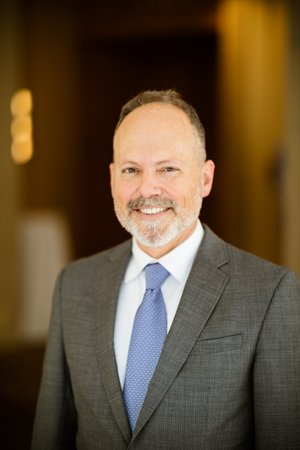
Stephen Mucher, Ph.D. is the founder of Sondage, a governance platform for scholar-guided life history recording and archival accession. He was formerly a Dean and the Director of the Osher Lifelong Learning Institute (OLLI) at UCLA, an administrator at UC Berkeley, and a faculty member at Bard College. In 2025, he walked the 2,655-mile Pacific Crest Trail from Mexico to Canada, conducting one hundred audio interviews under the trail name “Verbatim.” He has recorded voices in more than twenty-five countries.