
What You Can Do With It
Your archive is yours. Once it exists, a great deal becomes possible — and you decide all of it.
Your archive is finished, and it is entirely in your hands. What it becomes now, this year or across the decades ahead, is yours to decide. For many Fellows the archive turns out to be a beginning rather than an ending. A genuine primary source is a rare thing to hold, and rare material opens doors that thin material never could.
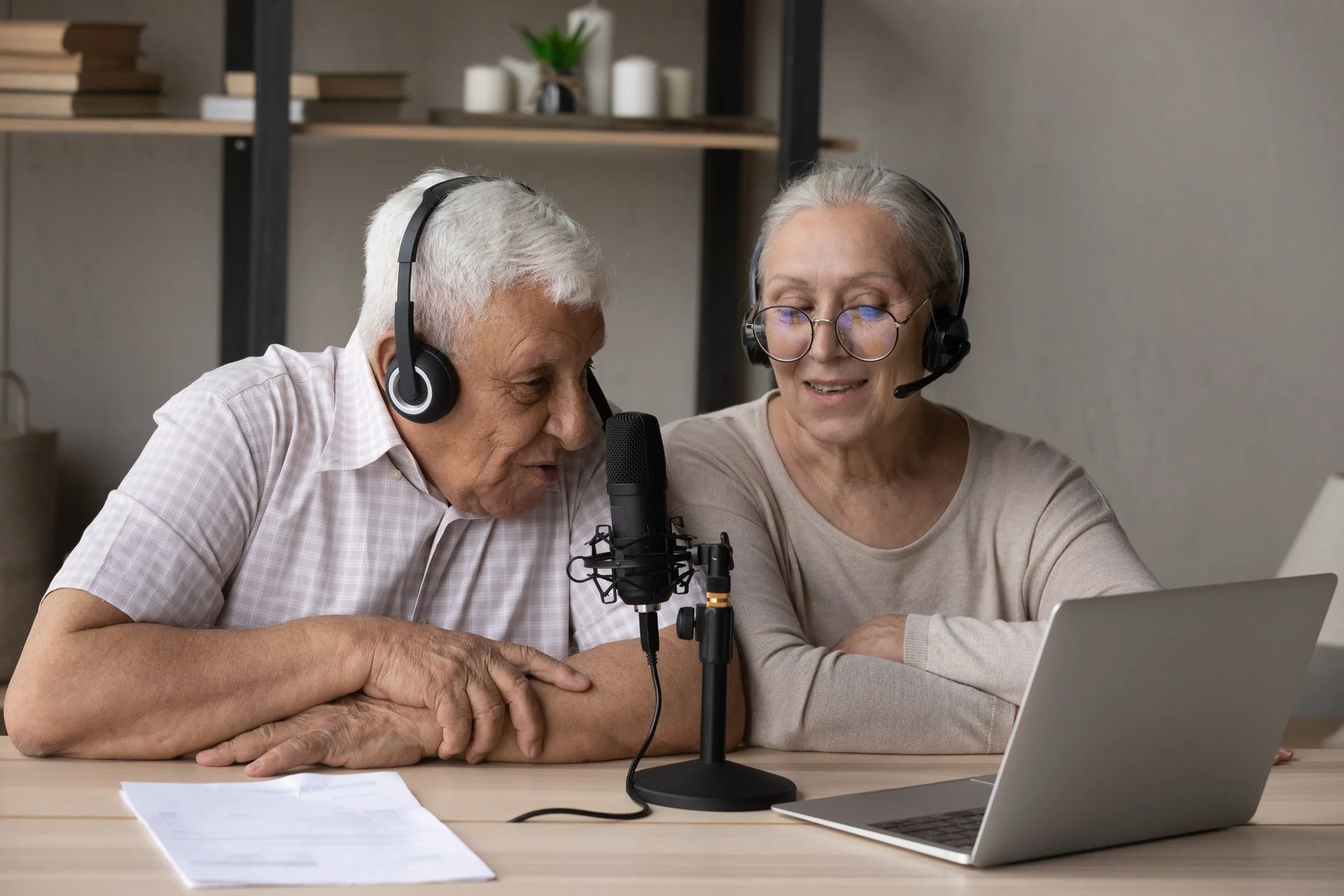
What Fellows do with their archives
Keep it. Many Fellows simply keep the archive and return to it privately in later years, often surprised by what their earlier voice had to say. This is an honored use, and for some it is the only one.
Share it or give it an institutional home. Some give the usable archive to a spouse, their children, or particular grandchildren while they are living — at a seventieth birthday, quietly over coffee, with a word about where to start. Others leave our extensive instructions for it to be shared later, on their own terms. And some want the record to outlast the family altogether and place it with an institution that will keep it, a path taken up further down this page.
Build new media from it. A Sovereign Archive is the strongest input for a book, a documentary, a commemorative volume, or a recorded portrait for a birthday or a memorial. If you have come to this page hoping for a bound volume or a film, hear this plainly: a verified, human-made primary source is the truest foundation such a work can be built on today. Because the material is deep, what is made from it can be extraordinary, and one archive can support many projects over the years. When you are ready, Sondage Beyond is where those conversations begin.
Return to it for your own thinking. Late life does not end the work of making meaning. Some Fellows come back to the archive as a thinking partner, listening again to what they said about a decision or a conviction and finding it sharpens the present.
Sondage Beyond
When you are ready to make something from your archive, Sondage Beyond is where those conversations begin. Sondage Beyond is our growing circle of partner organizations — producers, publishers, studios, and technologists — who understand the Standard's commitments and know how to work from a sovereign archive without compromising it. The quality of what becomes possible depends entirely on the quality of what was collected, and a Sondage archive carries material of genuine scholarly caliber. Sondage Beyond exists to connect that material with people who can do it justice.
The Archive and AI: Building vs. Using
Sondage distinguishes itself through standards that ensure the archives is built solely through interpersonal and accountable human choices. But notably, we do not carry that position into how the archive is used. The finished archive belongs to you. We deliver it in formats, files, and security measures practiced by such institutions as The Smithsonian, NASA, and the Vatican. You also receive access to copies of this content formatted for present-day use. In a world muddled by synthetic content, your archive increasingly stands out for its integrity. As a result, it will prove uniquely valuable for technologies that use AI to tell human stories in new ways. The searchable archive, a conversation for descendants, a portrait grounded in real testimony rather than fabrication — these become possible precisely because the source beneath them is true. The Standard governs how the record is made. It does not govern what you make from it.
Placing your archive with institutions
Some Fellows want their archive to live with an institution that matters to them — a university or alumni association, a professional society, a denominational or local historical collection. If you are considering this, Sondage is a good place to start. We hold relationships with university archives and alumni associations, and we can open the conversation on your behalf. The terms of any deposit remain yours to set — immediate or posthumous access, open or restricted, or anything between.
The line we hold
The boundary is simple, and it is the thing that keeps your archive sovereign. Sondage governs what goes into a Sovereign Archive and how it is owned. What you do with it afterward is yours. We do not keep your data. We take no commission on the work you make from your material, and any agreement you enter with a partner or an institution is between the two of you. Our part is to open doors and to vouch that the people behind them understand what a sovereign archive requires. Everything past that door is your decision, as it should be.
If you want the thinking behind the design
The commitment beneath all of this — that a record belongs to the person whose life it holds, and to no platform, including ours — is Non-Custodial Sovereignty, set out in full on The Practice. You do not need any of it to begin.
How to begin
Write to us. Tell us briefly what you are holding and what you are thinking about doing with it. The first conversation will be unhurried, and it will be with us directly.
Also worth reading: Sit for the Record • Curate Your Trove • What You Get