The Standard

SECTION 1 — The Opening Declaration

EYEBROW The Governance Platform

H1 HEADING A Standard for What Has Never Been Standardized

BODY COPY

For most of recorded history, the challenge of personal legacy was a challenge of survival. Would the document endure? Would the recording hold? Could a voice travel across the distance of time? These were the questions that organized archival practice — and they were, at root, engineering questions. Solve the medium and you solve the problem.

Beginning around 2023, a categorically different problem arrived. For the first time, it became genuinely difficult to determine from an artifact alone whether a primary source was produced by a human being or generated by a machine. A voice recording may be testimony or synthesis. A written account may emerge from lived experience or from a statistical prediction of what lived experience sounds like. The artifact no longer carries its own authentication.

This is not a crisis of forgery in the traditional sense. It is a crisis of category. The entire class of materials we call primary sources has been destabilized. The condition that once defined them — the recognition that a human being was present at their creation — can no longer be read from the evidence alone. While prediction models cannot produce primary sources, they can mimic them with considerable plausibility. Future historians and legacy-minded families will thirst for provenance. They will need chains of human custody. They will look for sources of authority that can attest to a record from the moment of its production.

There is a second, older problem underneath the new one. No agreed-upon system has ever existed for capturing a full human life as a primary source. Oral history came closest — but oral history was built for groups, for communities, for the intersection of individual lives with world events. Biography interprets rather than records. Apps prompt rather than witness. What the field has never produced is a rigorous, credentialed, methodologically defensible standard for the documentation of a single human life in its full interior complexity.

Sondage exists to provide both forms of attestation: against the synthetic and against the absent. It is a governance platform and credentialing standards body — not a recording service, not a memoir company, not a technology platform. It defines and certifies the conditions under which legitimate life-history work can occur, credentials the independent practitioners who perform it, and provides the infrastructure through which that work arrives permanently in the Fellow's sovereign control.

That is the Sondage Standard.

SECTION 2 — The Three Governing Principles

EYEBROW What the Standard Requires

H2 HEADING Three Commitments. No Exceptions.

INTRO Every Season conducted under the Sondage Standard — and every practitioner credentialed to conduct one — is governed by three principles. They are not aspirational values. They are the load-bearing architecture of the platform.

PRINCIPLE 1 — The Human Standard

AI is not used in the collection or interpretation of a Fellow's life history. This is not a privacy preference or a marketing position. It is a structural and ethical requirement built into every certification the platform issues and every Season it governs. The intersubjective exchange between a trained scholar and a living subject — the holding environment in which authentic disclosure becomes possible — cannot be replicated, approximated, or supplemented by a machine. An algorithm can prompt. It cannot witness. The Human Standard is non-waivable. Every Sondage-Certified Primary Source carries a digital attestation that no AI participated in its collection or interpretation.

PRINCIPLE 2 — Documented Provenance

A Sondage-Certified Primary Source is not merely a recording. It is a record whose origins and chain of custody can be fully established: the methodology applied, the equipment deployed, the credentialing standard met, the attestation of human-only collection, and the source's passage from first session to sovereign archival accession. That provenance chain travels permanently with the archive. When a biographer, a filmmaker, or a family historian draws on a Sondage-certified record a hundred years from now, they will find something that no ordinary recording can offer: documented proof of a human being's presence at the moment of creation.

PRINCIPLE 3 — The Non-Custodial Mandate

Sondage does not own what is produced. The archive belongs entirely to the Fellow from the moment of its production. Upon conclusion of the Season, the finished archive is transferred directly and encrypted into the Fellow's personal, family-controlled vault. Within twenty-four hours of confirmed deposit, all staging data held by the platform or its appointed practitioners is forensically erased under the Vanish Protocol. Sondage holds no master key. It retains no copy. It exercises no authority over the archive. We do not own your voice. You do.

SECTION 3 — Conviction Statement

PULL QUOTE Your life is a primary source. The question is whether it will be witnessed — or merely reconstructed.

ATTRIBUTION — Stephen Mucher, Ph.D., Founder · Sondage

SECTION 4 — The Practitioner Registry

EYEBROW The Practitioner Registry

H2 HEADING A Guild of Independent Scholars and Sound Professionals

INTRO PARAGRAPH

The practitioners who conduct Sondage Seasons are not employees or contractors of the platform. They are independent professionals — historians, humanists, and audio specialists — who have completed rigorous certification and chosen to practice under the Sondage Standard. The Registry is their professional home: a private directory of credentialed practitioners whose methodology, equipment, and ethical commitments have been verified and whose work carries the Sondage certification mark.

CREDENTIAL 1 — Certified Legacy Scholar (CLS)

Certified Legacy Scholars hold doctoral degrees in history, social science, or a related humanistic discipline. They have completed the ten-module CLS certification curriculum — mastering the Sondage Protocol's Six Frames, the ethics of testimony, the epistemology of primary source production, and the operational standards governing each phase of a Season. Independent practitioners in the fullest sense, they bring their own scholarly frameworks and disciplinary curiosity to every engagement. What the credential attests is mastery of the Standard. What makes the archive distinct is what each scholar brings to it.

CREDENTIAL 2 — Legacy Sound Producer (LSP)

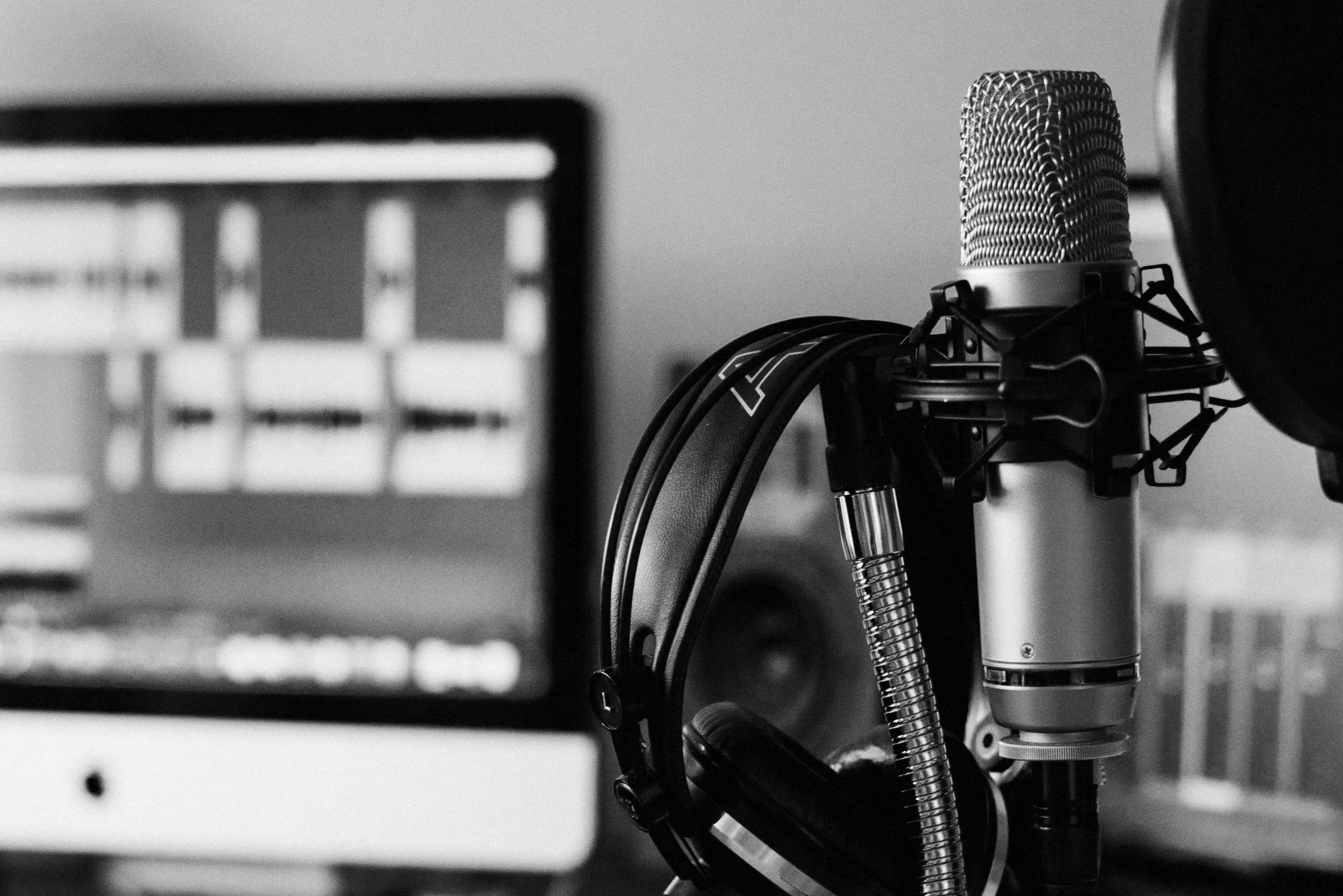
Legacy Sound Producers are independent audio professionals with demonstrable experience in location recording, podcast production, or broadcast sound. Certified to the Sondage Sound Standards, they assess and transform each Fellow's home environment into an acoustic space capable of 32-bit float capture at 48kHz — broadcast quality, without compression, without AI processing of any kind. The LSP governs the sound environment that makes the archive possible. Everything captured under their standard is, in the precise archival sense, true.

CREDENTIAL 3 — Legacy Collection Curator (LCC)

The Legacy Collection Curator credential is in development. It is designed for heritage consultants, personal historians, digital asset managers, and archival professionals who bring expertise in collection strategy, long-term preservation governance, and chain-of-custody documentation to the work. Applications open Q3 2026.

LINK Explore the Registry →

SECTION 5 — Founder's Intellectual Provenance

EYEBROW Why This Standard Exists

H2 HEADING A Walker. A Listener. A Lifetime of Recorded Voices.

BODY COPY

I grew up in the Appalachian foothills, in a community where elders were primary sources long before I had language for what that meant. At church, around dinner tables, on porches and in break rooms, something irreplaceable moved through the conversations of older people — not performance, but testimony. A held space where genuine truth, spoken to an attentive witness, became a form of transmission. I understood early that what was moving through those rooms was not being kept anywhere. The cassette recorder I carried to family reunions and church gatherings was a child's response to a problem I didn't yet know how to name.

The problem clarified slowly, across a long career. At Bard College, at UC Berkeley, and eventually at UCLA — where I directed one of the country's largest lifelong learning institutes and spent years in the company of modern elders — I watched the same hunger surface again and again. These were accomplished people, freed at last from the performance demands of institutional ambition, who had arrived at a moment of genuine readiness to speak their truth. And there was nothing equal to the occasion. Apps offered prompts. Ghostwriters offered polish. The academy had spent fifty years establishing that ordinary lives are the primary record of history — and had never built the infrastructure to capture them.

In 2025, I resigned my position at UCLA and walked 2,655 miles from the Mexican border to Canada. My fellow hikers gave me a trail name: Verbatim. I carried a high-definition recorder and one question: Is this trail an extension of the life you live, or a break from it? More than one hundred interviews later, what the trail confirmed was what I had known since 1995, when I sat down with my ninety-four-year-old grandfather Ralph and recorded 170 minutes of life reflection on two BASF cassettes: that people will speak their genuine truth to a curious, prepared, attentive human being. And that they deserve one.

Sondage is the infrastructure that practice has always deserved. It did not exist. Now it does.

LINK Read Field Notes →

SECTION 6 — Dual CTA

H2 HEADING Where Would You Like to Begin?

SUBHEADING The Standard serves two communities. Both are welcome here.

BUTTON 1 BEGIN YOUR SEASON For Senior Fellows → /season

BUTTON 2 EARN A CREDENTIAL For Scholars & Sound Professionals → /registry

META DESCRIPTION (157 characters) Sondage is a governance platform for scholar-guided life history documentation. The Standard defines how a human life becomes a verified, sovereign primary source.

Fatima:

Section 1 runs long by design — this is the manifesto section and it needs to do real argumentative work before anything else on the page lands. If you want to tighten it, the fourth paragraph (on the missing standard) is the best candidate for compression, but I'd hold all five paragraphs if the layout allows.

Section 5 is written as intellectual origin story, not biography — per the brief. Ralph is named but not over-elaborated; the PCT is present as methodology, not adventure. The register is reflective and first-person without going soft.

The pull quote in Section 3 is a tighter, more adversarial version of the one suggested in the brief. "Reconstructed" rather than "summarized" carries the AI argument without naming it directly — which keeps the quote usable across contexts for a long time.