
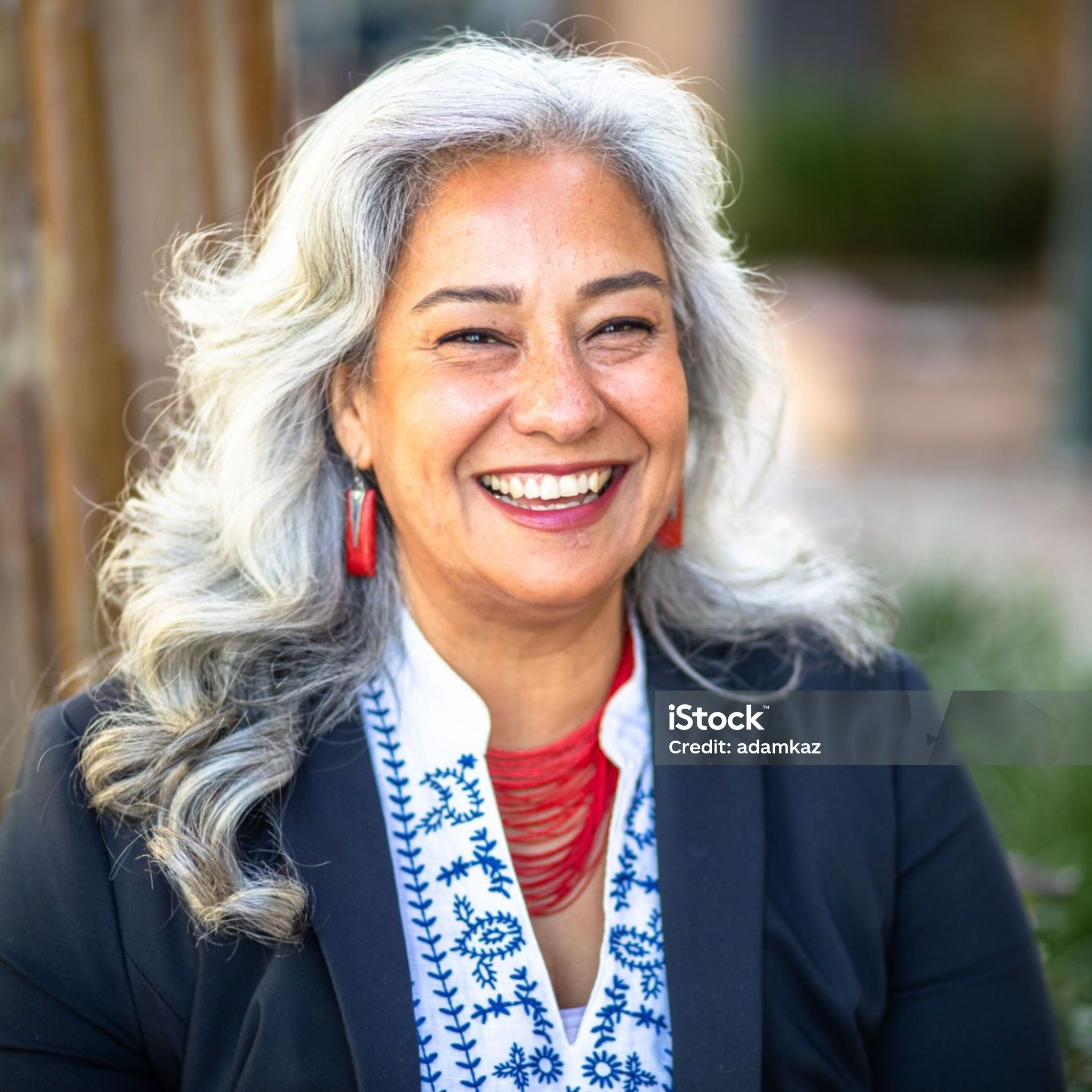
Dr. Marisol Vega-Castillo, Ph.D.
San Luis Obispo, California
Certified Legacy Scholar
Sondage Standard
Certified 2026
Marisol Vega-Castillo is a historian of the American West whose work sits at the intersection of infrastructure, migration, and the lives ordinary people built in its wake. She holds a Ph.D. in History from Vanderbilt University, where her dissertation examined labor organizing along Southern Pacific rail lines in the 1880s. Her first teaching position at UNC Greensboro introduced her to community oral history, redirecting her scholarship toward the living archive — the stories still carried in the bodies and voices of people whose families built the West. She is the author of one book and several peer-reviewed articles, and currently holds an appointment at California Polytechnic State University, San Luis Obispo. She came to Sondage because she believes every life contains primary sources the academy has not thought to ask for.

In this video, I welcome you to the work and share a moment from a recent afternoon with my Tía — a conversation thirty years in the making that taught me something I didn't know I'd been missing.
ACADEMIC INFORMATION
EDUCATION Ph.D., History — Vanderbilt University, 2013 M.A., History — Arizona State University, 2008 B.A., History and Latin American Studies — UC San Diego, 2006
PREVIOUS AFFILIATIONS Lecturer, History — California Polytechnic State University, San Luis Obispo, 2018–present Visiting Assistant Professor, History — UNC Greensboro, 2014–2018 Graduate Teaching Fellow — Vanderbilt University, 2009–2013
SELECTED WORK Iron Ground: Labor, Migration, and the Making of the Western Railroad, 1870–1900 — University of New Mexico Press, 2017 "The Voices the Archive Left Out: Oral History and the 19th-Century West" — Western Historical Quarterly, 2021 "Listening as Method: What Community Oral History Teaches the Academic Historian" — The Public Historian, 2023
EXTERNAL LINKS
Curriculum Vitae | LinkedIN | Academia.edu | Personal Site
SEASON OVERVIEW
A Season with Marisol
You have spent a lifetime accumulating something the world calls experience and I call evidence. My job is to treat it with the same rigor I bring to a nineteenth-century labor archive — which means I come prepared, I listen for what is not being said, and I know that the most important document is not always the one someone intended to preserve.
Over twelve weeks, we will move through six domains of your life together. I will have done my research before we begin. You will never need to explain context I should already know. Between every session I will be in contact — not to check in, but to continue the inquiry by other means.
What we produce is not a memoir and not a biography. It is a primary source. It is the record of how you actually thought, at the moment you were finally free to think it fully. That record belongs entirely to you. I am here to make sure it exists.
FRAMES
HABITUS I approach Habitus as a historian approaches a founding document — not as background, but as evidence. The world you were born into made claims on you before you could object. I want to know exactly what those claims were.
FORMATION My own formation crossed borders — geographic, disciplinary, generational. I am drawn to the moments when a person's received identity collides with the self they are trying to become. That collision is where the most honest material lives.
VOCATION I spent years studying people who built things with their hands for wages history barely recorded. I bring that same attention to work of every kind — what it asked of you, what it returned, and what it quietly cost.
AVOCATION The railroad workers I studied sang, organized, cooked, and prayed alongside their labor. The non-market self is never separate from the working self — it is its necessary complement. I treat what you chose freely as primary evidence.
AFFECTIONS I am a social historian by training, which means I have always believed that nothing happens alone. I map relationships not by who was present but by what each person required of you and what they made possible.
CONTEMPLATION This is the frame I approach most slowly. The questions here have usually been waiting decades for the right conditions. I am not in a hurry. Neither, I have found, is the person who finally gets to answer them.
PUBLIC-FACING SCHOLARSHIP
"What the Railroad Workers Knew: Oral History and the Limits of the Archive" Published on Academia.edu · January 2026
"On Listening to Elders in an Age of Synthetic Substitutes" Published on LinkedIn · March 2026
CERTIFICATION STATEMENT
Marisol Vega-Castillo, Ph.D. holds the Certified Legacy Scholar designation issued by Sondage Standard LLC and is appointed to the Sondage Registry. This seal signifies completion of the CLS certification curriculum, adherence to the Sondage Protocol, and standing as an independent practitioner authorized to conduct Sondage Seasons.
Certified 2026 | sondagestandard.com/registry
IN A COLLEAGUE’S WORDS
"Marisol brings to a life history the same discipline she brings to an archive — she prepares exhaustively, listens without agenda, and knows that the most important document in the room is the person in front of her. I have referred colleagues to her without hesitation and would do so again."
— Dr. Renata Osei-Mensah, Associate Professor of American Studies, University of New Mexico; former co-panelist, Oral History Association Annual Meeting
"What sets Marisol apart is not her credentials — those are evident — but her patience. She understands that a life is not a linear argument, and she never tries to make it one. Anyone who trusts her with their story is in serious scholarly hands."
— Dr. James Corrigan, Professor of History, California Polytechnic State University, San Luis Obispo