

Sondage Standard
Lisa Dworkin
Minneapolis, Minnesota
CERTIFIED LEGACY COLLECTION CURATOR 2026
Professional Background
Practice
I have spent fifteen years organizing the visual and material record of other people's lives.
My training is in art history and library science, with a graduate concentration in visual archives at the University of Minnesota. My first professional years were inside an institution, processing photographic collections and learning the disciplines that institutional archiving teaches. I left for private practice in 2014 and have not returned.
The work that arrived once I went private was wider than I expected. Families called about photographs and brought me letters, journals, professional papers, recordings, and objects whose meaning was held only in the family's memory. The practice expanded because the material did. I earned my credential with The Photo Managers and added the working knowledge of digital asset management the families were asking for. I now work with one family at a time on collections that do not have a single trade name.
I came to Sondage because the work I had been doing for years had no published outcome standard to point to. The collections I assembled were trusted because I was trusted. When I was no longer in the room, the trust had no anchor. The LCC credential changes that.
What an engagement looks like
A Heritage Curation engagement begins with a four-week Seminar on the Trove and continues, on commissioning, into a full six-month Chapter of accession.
The first weeks are spent looking together. The Senior Fellow brings me what she has and I help her understand what it is. The Significance Determination, in the second and third weeks, is where the work earns its name. The two of us, in disciplined conversation, decide what is worthy of preservation, what is worthy of description, and what may be released without loss. The Chapter that follows is the slow work of accession, organization, and the documentation that allows the collection to be read by a descendant fifty years from now.
The materials remain in the Senior Fellow's keeping at every stage. The architecture of the eventual archive is supplied by Sondage. The judgment is hers and mine.
Curatorial Statement
A family's collection is not a problem to be solved. It is a body of material that carries the shape of a life, and it asks to be read with the discipline any primary source asks for. My work is to bring the methodological frame to the conversation. The judgment, where it concerns what a particular photograph or letter or object means, belongs to the person who lived it. What I sign at the close of an engagement is the record of how the two of us read it together.
Worked Significance Determination
A redacted sample of a complete Significance Determination from a recent engagement is available to Senior Fellows actively considering commissioning a Season.
How I work
[Unlisted video. 4 minutes 12 seconds.]
A look at the room where I receive materials and the kind of attention the work asks for.
Credentials
Legacy Collection Curator, Sondage. Certified 2026.
Certified Photo Manager, The Photo Managers.
Member, Society of American Archivists.
B.A. History (Art History minor), St. Olaf College
M.A., Library Science, University of Minnesota.
To inquire
A short message is enough. What you have, and what you are thinking about doing with it. The first conversation will be unhurried.
[Contact form]
How I work
A Note from Your Curator
I have spent most of my career in rooms that were not designed for recording. That turns out to be the best training there is for this work. Here is how I think about sound, space, and what it means to get a voice on the record the optimal way.
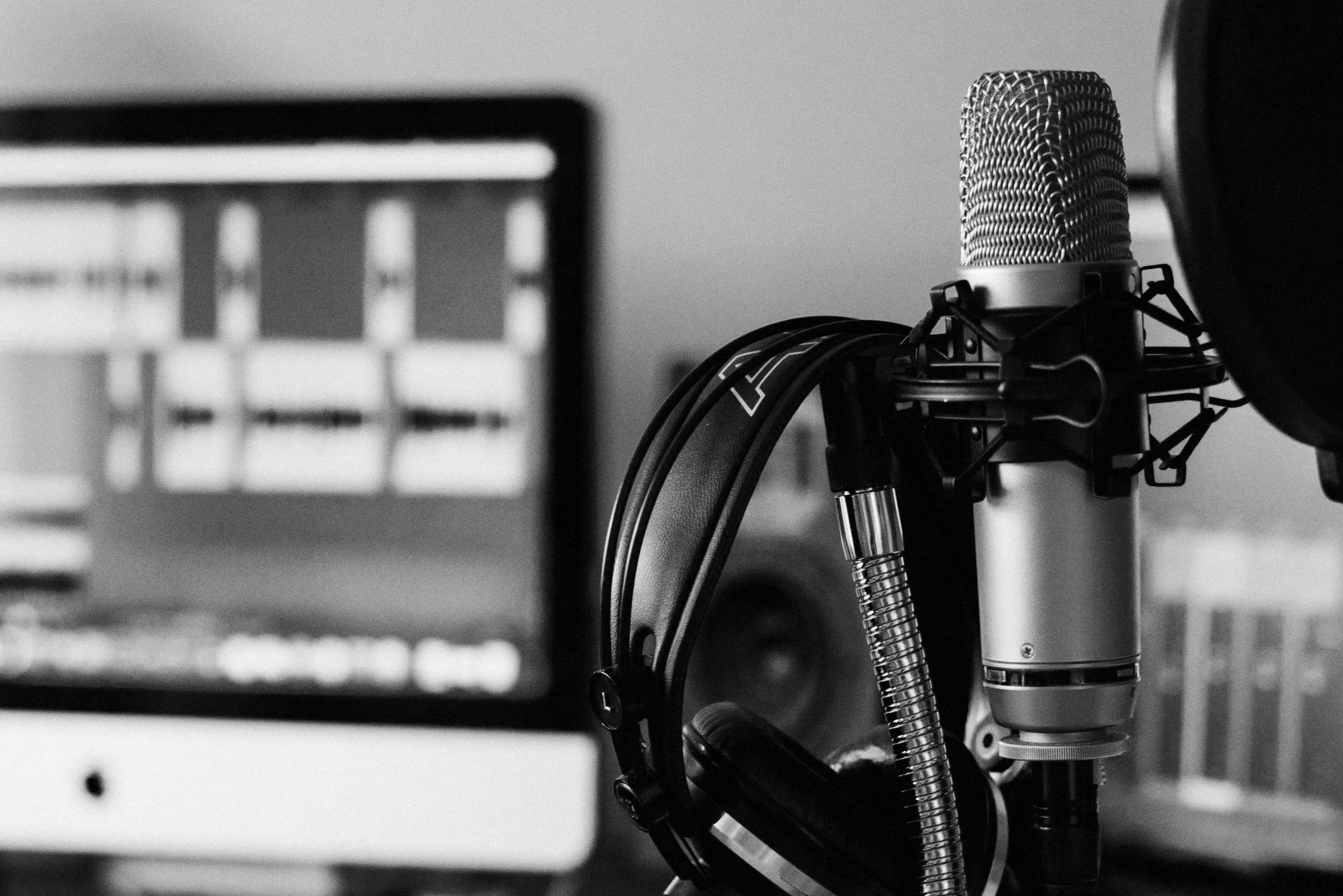
Soundcheck
The Voice in the Room
“I am Spencer Ward, Certified Legacy Sound Producer. Welcome to the Sondage Sound."
Four disciplines. One standard.
Sanctum
Every room has an acoustic truth before you arrive. My job is to find it before I change anything. I've worked in living rooms, outdoor spaces, and purpose-built environments, and what I've learned is that the room is always telling you something — about the life lived inside it, about what the recording will have to carry. I listen to the space first. Then I decide what it needs.
Rig
The most consequential technology decision in legacy recording happens before you unpack a single piece of gear — it's knowing what the Fellow can operate alone by Week 3, and building toward that. My signal chain is chosen to serve the archive, not to demonstrate my preferences. I believe in restraint over complexity, in stability over novelty, and in the truth that no microphone has ever told on its own.
Witness
I'm listening for what the voice is carrying that the words aren't quite holding yet. There's a difference between audio that is technically clean and audio that is honest — and that difference is almost never about the equipment. Processing removes it. Archival practice protects it. My standard is simple: when I listen back, the recording should sound like that person, in that room, on that day. Nothing more. Nothing less.
Presence
My role in a Season has three phases, and the last one is to make myself unnecessary. Before recording begins, I'm an engineer. During Matriculation, I'm a technician and a guide. After Week 3, I'm a steward — responsible for everything that flows out of the sessions, present for none of what flows into them. The Fellow should forget there is a microphone. That's not absence. That's the work, completed.
Public Dispatch
From the Field
Field Notes The Smarter the Mic, the Less It Hears AI noise suppression doesn't just clean audio — it makes decisions about what a voice is allowed to carry. A review of the Blue Ember X and a case against letting the algorithm choose what matters. spencerwardaudio.com · Feb 2026
Podcast Gain Structure, Ep. 212: Recording What Lasts. Broadcast fidelity and archival fidelity are not the same thing. The most important recording I've ever made was in a living room. A conversation with Dara Okonkwo on what we get wrong about permanence. Mar 2026
Forum On Capturing Room Tone in Lived Spaces Room tone isn't a problem to solve. It's a record of where someone lives. On why I stopped treating ambient sound as interference. Comments on Gearspace · Jan 2026
Essay What Processing Removes There is a texture in an unprocessed voice that a transcript never captures. On why archival restraint is not a limitation but an obligation. spencerwardaudio.com · Dec 2025
Spencer Ward holds the Legacy Sound Producer credential issued by Sondage Standard LLC and is appointed to the Sondage Registry. The credential signifies completion of the LSP certification curriculum, adherence to Sondage Sound Standards, and standing as an independent practitioner authorized to serve as acoustic architect for Sondage Seasons.
Certified 2026 · sondagestandard.com/registry