Can Oral History and Auto-autobiography Have a Candid Conversation?
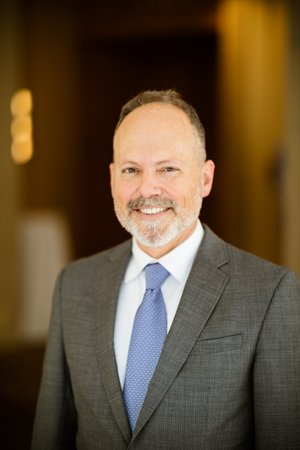
Stephen Mucher, Ph.D. · Founder, Sondage
The practice of interpersonal inquiry for the purpose of creating and sharing family memory across generations is enduring, from ancient oral traditions to the modern institutional archive. In its most current commercial form, it is also lucrative. The company that grew to become Ancestry.com tapped into this impulse as early as 1983, setting out to democratize access to scattered archives and engage genealogy communities. The company added tools predictably through the decades that followed, transitioning from a boutique print publishing house to a privately held, subscription-based global online platform now worth as much as $10 billion (Wang 2025).
Ancestry promises “to empower personal journeys” and “connect everyone with their past so they can discover, preserve, and share their unique family stories” (Ancestry n.d.). Its newest products, propelled in part by the 2025 purchase of analog digitization giant iMemories, promote human-agent interaction through AI Stories, Ask AncestryAI, Listen and Explore, and AncestryPreserve, the last of which returns enhanced family records and, using AI Stories, can summarize documents and add context to the subscriber’s collection.
This shift is subtle but significant: from products that assist in the finding, organizing, and transcribing of a family story, to more suggestive and interpretive products that ultimately reshape the story itself, giving it a more familiar narrative form and enhancing its readability. Ancestry, nonetheless, remains cautious about this interpretive role in comparison to competitors in the living memoir space like StoryWorth, Remento, or Autobiographer, applications that variously use algorithmic question protocols or dynamic conversational AI to extract and record biographical information from elders, reformulate that content, and return it as an audience-sensitive narrative in book form.
I think of this development as auto-autobiography, the production of a life narrative grounded in the documented reminiscences of a human author, but retold without clear methodological transparency. It reflects a marketing evolution for a field that has long emphasized family history research as an act of personal agency—an inherently valuable labor of investigation and discovery—best assisted by limited support tools analogous to a librarian and an amanuensis. Contemporary auto-autobiography is far more outcome oriented, selling consumers a faster and more efficient path to discovery and a more prestigious final product. I call this two-stage process Automated Biographical Elicitation and Re-tell (ABER). It is the method behind auto-autobiography for family-level historical preservation purposes, and I am investigating how it compares to oral history.
I am a social historian who studies geragogy, the way adults in later life learn and make meaning. On the surface, both social history and geragogy are fields that should be encouraged by the growing accessibility and affordability of ABER. Social history evolved over the last half-century as an explicit rebuke to institutional archives that failed to record or otherwise omitted ordinary lives. The discipline gave birth to oral history as a distinct methodology—a set of inquiry tools, ethics, and goals—that has had a profound effect on the historical profession, reimagining the archive and revolutionizing historical production. But even beyond the discipline of history, the practices of oral inquiry, ethnography, and life review have produced wide-ranging positive effects on narrators (the people interviewed), with implications especially for the emotional and cognitive lives of older adults.
ABER reduces both the friction and cost of later-life review and documentation. That practice has been shown to reduce depression and loneliness in older adults (Pinquart and Forstmeier 2012; Yang et al. 2025), and the family stories it preserves are associated with stronger identity and well-being in younger generations (Duke et al. 2008; Merrill and Fivush 2016). Oral historians have long argued that it also shifts power dynamics toward groups on the margins and grounds a more inclusive, dynamic human historical record (Thompson and Bornat 2017). Why then do oral historians balk at this development? How does auto-autobiography differ from oral history, and why does it matter?
Historians, and oral historians in particular, have struggled to agree on the exact methods or practices that distinguish our disciplines. My project at the Digital Life Initiative at Cornell Tech surveys several previous efforts to define historical methods and builds a rubric that facilitates comparison and analysis. My purpose is not to rehash decades of historiographical debate. Oral history and adjacent ethnographic practices are fiercely multidisciplinary, prone to definitional disagreement, and drawn to a wide range of topics and methods. Consensus on what we do and what to call it has not come easily (Gluck 2018). Both the Oral History Association (OHA) in the United States and to a lesser degree the Oral History Society (OHS) in Britain have gravitated away from specific “standards” toward a “suite of statements” elucidating principles, guidelines, ethics, and toolkits (Reeves and Milligan 2018). This hesitancy is rooted in years of activism and a recognition that co-created practice is not easily standardized.
The rise of auto-autobiography, and generative AI more broadly, is already spurring renewed conversation about what oral historians share and why that work needs to be communicated more fluently beyond the pages of academic journals or conference proceedings. In a 2026 special section of the Oral History Review, Mary Larson weighs analytical and generative AI against the OHA's principles and best practices, with particular attention to context and consent (Larson 2026). The American Historical Association has issued guiding principles for AI in history education (American Historical Association 2025), and a separate AHA committee is developing guidelines for research and publication (American Historical Association n.d.). Millions of consumers are now reading their family past in forms that were collected and told back to them through generated language. The vendors call this history. The consumers call it history. But what makes it so?
While the OHA remains standards-averse, a close read of its statements demonstrates some degree of agreement on what oral history practice values. That practice, for example, is necessarily preplanned and co-created by a trained interviewer and an informed narrator through ethical expectations like co-constructed rolling consent, procedural disclosure, acknowledgment of interviewer bias and sensitivity to power dynamics, trauma awareness, community ownership, harm potential and risk reduction, avoidance of stereotypes and misrepresentation, to name a few. Furthermore, the OHA defines the value of oral history as helping “to place people’s experiences within a larger social and historical context, and conversely, to contextualize social and historical events through how people lived them” (Oral History Association n.d.). That outcome raises questions about who is qualified to conduct inquiry and what methods they need to bring into practice. The oral historian is expected to be trained, prepared, and disciplined, and to bring both questioning protocols and follow-up that contextualize, corroborate, periodize, and apply other historical thinking approaches to the inquiry. Notably, the statements locate the oral historian's unique responsibility in co-creating, co-representing, and co-interpreting (Oral History Association 2018a), but they have not been updated to address responsibility for claims and findings in the language of human authorship and accountability that scholarly publishers have adopted to address the rise of generative AI (COPE 2023).
One particular passage in the OHA’s “Oral History Best Practices,” describing how follow-up questioning should be framed, illustrates many of these disciplinary expectations and offers a central candidate for comparison to both stages of ABER.
Along with asking open-ended questions and actively listening to the answers, interviewers should ask follow-up questions, seeking additional clarification, elaboration, and reflection. When asking questions, the interviewer should keep the following in mind:
. . .
b. Interviewers should work to achieve a balance between the objectives of the project and the perspectives of their narrators. Interviewers should provide challenging and perceptive inquiry, fully and respectfully exploring appropriate subjects, and not being satisfied with superficial responses. At the same time, they should encourage narrators to respond to questions in their own style and language and to address issues that reflect their concerns.
c. Interviewers should be prepared to extend the inquiry beyond the specific focus of the project to allow the narrator to freely define what is most relevant.
d. In recognition of not only the importance of oral history to an understanding of the past but also of the cost and effort involved, interviewers and narrators should mutually strive to record candid information of lasting value to future audiences. (Oral History Association 2018b)
The passage offers a potential standard against which both ABER and human-conducted inquiry can be measured, reminding practitioners that historical inquiry is a form of labor, inviting extensive judgment about content and context, and requiring a determination about what is or is not worth keeping. But perhaps most telling, it identifies the problem of superficiality and positions candor as a proper aim of historical inquiry.
Asked about the challenges Ancestry has faced introducing generative products, chief technology officer Sriram Thiagarajan has defended “AI as an amplifier of human capability, not a replacement,” adding that human review remains essential to reduce hallucination and “to ensure historical accuracy and cultural awareness” (Thiagarajan 2026). But candor represents a particular kind of accuracy, less an authentication step or corroboration of facts and more a disposition toward inquiry focused on openness, sincerity, forthrightness, and telling it the way it is. In this context, the practitioner’s commitment to emotional safety, care, and validation is not merely an ethical stance; it is a methodology believed to produce better history.
Auto-autobiography continues to gain in popularity. Researchers in other fields have found that non-human interviewers provide safety and anonymity that increase disclosure (Lucas et al. 2014; Lucas et al. 2017), and that a conversational AI can deliver therapeutic benefits (Heinz et al. 2025). Other research complicates the picture. Participants in one recent experiment reported disclosing no more intimately to a chatbot than to a person (Croes et al. 2024). Across eleven leading models, AI affirmed users far more often than humans did—a potential sycophantic contrast to the “challenging” inquiry urged in the OHA statement—and users preferred it (Cheng et al. 2026). And a generative chatbot interviewer induced more than three times as many immediate false memories as a control condition (Chan et al. 2024). None of these studies concerns life review or considers the disciplinary integrity of agent-to-human stories of the past. Does ABER elicit history or something else? Does it re-tell history or something else? Oral historians will need to talk through these and other questions soon, and with candor.
References
Ancestry. n.d. “Welcome to Ancestry.” Ancestry Corporate. Accessed September 19, 2026. https://www.ancestry.com/corporate.
Chan, Samantha, Pat Pataranutaporn, Aditya Suri, Wazeer Zulfikar, Pattie Maes, and Elizabeth F. Loftus. 2024. “Conversational AI Powered by Large Language Models Amplifies False Memories in Witness Interviews.” Preprint, arXiv, August 8. https://doi.org/10.48550/arXiv.2408.04681.
Cheng, Myra, Cinoo Lee, Pranav Khadpe, Sunny Yu, Dyllan Han, and Dan Jurafsky. 2026. “Sycophantic AI Decreases Prosocial Intentions and Promotes Dependence.” Science 391:eaec8352. https://doi.org/10.1126/science.aec8352.
COPE (Committee on Publication Ethics). 2023. "Authorship and AI Tools." COPE position statement, February 13, 2023. https://publicationethics.org/guidance/cope-position/authorship-and-ai-tools.
Croes, Emmelyn A. J., Marjolijn L. Antheunis, Chris van der Lee, and Jan M. S. de Wit. 2024. “Digital Confessions: The Willingness to Disclose Intimate Information to a Chatbot and Its Impact on Emotional Well-Being.” Interacting with Computers 36 (5): 279–92. https://doi.org/10.1093/iwc/iwae016.
Duke, Marshall P., Amber Lazarus, and Robyn Fivush. 2008. “Knowledge of Family History as a Clinically Useful Index of Psychological Well-Being and Prognosis: A Brief Report.” Psychotherapy: Theory, Research, Practice, Training 45 (2): 268–72. https://pubmed.ncbi.nlm.nih.gov/22122420.
Gluck, Sherna Berger. 2018. “The History behind Our Work, 1966–2009.” In OHA Principles and Best Practices. Oral History Association. https://oralhistory.org/principles-and-best-practices-revised-2018/.
Heinz, Michael V., Daniel M. Mackin, Brianna M. Trudeau, et al. 2025. “Randomized Trial of a Generative AI Chatbot for Mental Health Treatment.” NEJM AI 2 (4). https://doi.org/10.1056/AIoa2400802.
Lucas, Gale M., Jonathan Gratch, Aisha King, and Louis-Philippe Morency. 2014. “It’s Only a Computer: Virtual Humans Increase Willingness to Disclose.” Computers in Human Behavior 37:94–100. https://doi.org/10.1016/j.chb.2014.04.043.
Lucas, Gale M., Albert Rizzo, Jonathan Gratch, et al. 2017. “Reporting Mental Health Symptoms: Breaking Down Barriers to Care with Virtual Human Interviewers.” Frontiers in Robotics and AI 4:51. https://doi.org/10.3389/frobt.2017.00051.
Merrill, Natalie, and Robyn Fivush. 2016. “Intergenerational Narratives and Identity across Development.” Developmental Review 40:72–92. https://doi.org/10.1016/j.dr.2016.03.001.
Oral History Association. 2018a. “OHA Statement on Ethics.” In OHA Principles and Best Practices. Adopted October 2018. https://oralhistory.org/oha-statement-on-ethics/.
Oral History Association. 2018b. “Oral History Best Practices.” In OHA Principles and Best Practices. Adopted October 2018. https://oralhistory.org/best-practices/.
Oral History Association. n.d. “Oral History: Defined.” Accessed September 18, 2026. https://oralhistory.org/about/do-oral-history/.
Pinquart, Martin, and Simon Forstmeier. 2012. “Effects of Reminiscence Interventions on Psychosocial Outcomes: A Meta-Analysis.” Aging & Mental Health 16 (5): 541–58. https://doi.org/10.1080/13607863.2011.651434.
Reeves, Troy, and Sarah Milligan. 2018. “2018 Principles and Best Practices Overview.” In OHA Principles and Best Practices. Oral History Association. https://oralhistory.org/principles-and-best-practices-revised-2018/.
Thiagarajan, Sriram. 2026. “Sriram Thiagarajan of Ancestry: How We Leveraged AI to Take Our Company to the Next Level.” Interview by Chad Silverstein. Authority Magazine, June 12, 2026. https://medium.com/authority-magazine/sriram-thiagarajan-of-ancestry-how-we-leveraged-ai-to-take-our-company-to-the-next-level-356e851ac132.
Thompson, Paul, and Joanna Bornat. 2017. The Voice of the Past: Oral History. 4th ed. Oxford University Press.
Wang, Echo. 2025. “Exclusive: Blackstone Weighs Options for Ancestry.com, Including Sale or IPO, Sources Say.” Reuters, September 25, 2025. https://www.reuters.com/business/exclusive-blackstone-mulls-options-ancestrycom-including-possible-sale-or-ipo-2025-09-25/.
Yang, Haiqi, Qiqing Zhong, Bingyue Han, et al. 2025. “Effects of Reminiscence Therapy for Loneliness in Older Adults: A Systematic Review and Meta-Analysis.” Age and Ageing 54 (5): afaf136. https://doi.org/10.1093/ageing/afaf136.
——
A version of this essay was written for the Cornell Tech Digital Life Initiative Critical Reflections, Fall 2026.