When History Writes Itself
Notes on leaving the academy, hearing voices, and following a trail.
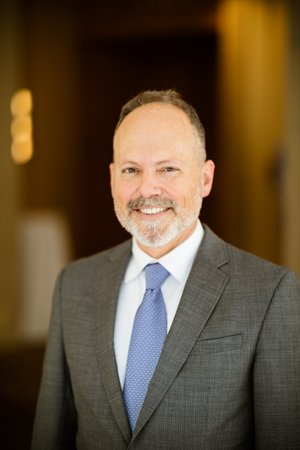
Stephen Mucher, Ph.D. · Founder, Sondage
When I left UCLA last year I was ready for a break. A real break. In May I put on a backpack and started walking north from the Mexican border, and five months later I finished 2,655 miles away at the Canadian line.
I knew I would miss the leadership work and the good colleagues in Westwood, and I knew I would miss the older learners at the Osher Lifelong Learning Institute most of all. But broader parts of the job had gone stale. AI talk was everywhere. On the trail, off the grid, alongside a cadre of wonderfully odd fellow hikers, the conversations were different. On summits, at watering holes, and in camp we discussed the limitations of technology and our growing respect for humanity's place in nature. We marveled at the physical achievement behind us and the challenge ahead. Weeks earlier I had been sitting in an office rehashing what AI can do and why we need it. On the trail, in the wild, I was reminded what humans can do and why we need them.
I carried a small recorder. Somewhere outside the Mojave I began stopping the hikers I met with a question. Is the trail an extension of the life you live, or a break from it? The community gave me a trail name. "Verbatim." By the time I reached the Cascades I had recorded more than a hundred responses. Not exactly oral history, but an informal snapshot designed to capture a moment of one person’s thinking.
Most of the hikers reacted to the question with surprise, then delight. You can hear it in the tapes. The question sneaks up unexpectedly. Try it. Insert your own favorite pastime and then ask it of yourself. You do not really know the answer until you start talking. That talk, into a recording machine, is a primary source. It is a record of human thinking.
§
That hike set the stage for what I am doing now. AI is a profound and often promising development. But my primary interest has shifted to what it cannot do, to the times and places where humans are irreplaceable. Predictably, for me that turns to how humans collect, record, keep, and retell accounts of our past. That is making history. I will argue here and in the work ahead that a machine cannot do it.
I am a social historian and a geragogist. At UCLA I had the privilege of leading and learning from remarkable students in their seventies and eighties. That group showed me, among other things, the enduring value of later-life reflection and life history documentation. On the trail I had more time to think through the value of the practice, not as a luxury or a privilege for the few but as something more universal. A rite of passage. A developmental phase. A tool for spiritual integration. A season for cognitive growth and intergenerational sharing.
Historians famously avoid predicting the future. But I have been thinking a great deal about how historians, or our family descendants, will study us someday. If the field of social history endures, and absent any digital catastrophe, I think we can postulate a few things. First, tomorrow's social historians will want to know the stories and motivations of ordinary people like us. Second, they will ask questions about us we never imagined. Third, they will uncover and use sources we never expected anyone would care to read. Fourth, they will draw from a massive archive. Today that archive looks disjointed. Tomorrow the curious historian will read its contents alternatively as performative, private, mundane, or, (and this is new) generative. They will be drawn in by the obvious: emails, text messages, social posts. And by the less predictable: medical data, GPS coordinates, video logs, web stats, dating profiles, Yelp, Uber, and Airbnb reviews.
To the historians of the future we will appear as the most documented generation to date. More importantly, we will represent the only generation to form both before and after the emergence of anthropomorphic AI. We will fascinate them. But still, I suspect they will want more. Where will they go to understand our interior lives? What sources will show them how we imagined, created, or thought?
§
That distance between our surface and interior lives represents the Input Gap. Large language models can scrape our public digital footprint and construct a plausible account of our lives. Our places, titles, affiliations, public statements, offer coordinates to shape a story. In seconds, the machinery can recreate a fluent biography or memoir, with or without permission, and narrate it with the confidence of a witness. These narratives can mimic something deeper but they can never truly reach the part of a life that was never externalized. The crucible moments. The decisions made in private. The meaning a person has assigned, over decades, to a particular loss, a particular faith, a particular transition.
For most of us that material is found only in one place. It resides in the body and voice of the person who lived it. It has never been indexed, and won’t be unless and until someone asks.
It is a strange and discomforting place for me to stand. As a historian I should be living in the past. Instead I am projecting a hundred years forward, and I cannot let these questions go. The trail led me here, and to Sondage, a certification and standards framework for human-conducted life history and family-level curation.
In the absence of such standards, commercial heritage apps and genealogy platforms, a six billion dollar industry, confidently projects a future it cannot deliver. These technologies increasingly, and often invasively, use AI to collect and interpret personal histories, promising a polished book or video or website in return and calling it history. They now engage in something I call auto-autobiography, the life story that appears to write itself. A story prompted by you but written by no one.
Sondage takes a different approach. Put plainly, the Sondage Standard asserts that an account of a human past interpreted without humans — embodied, accountable, and methodologically transparent — is something other than “history.” Our standards and practices are built around Human Authorship, Embodied Provenance, and Non-Custodial Sovereignty. This is a proposed response to the condition I have elsewhere called the Authentication Horizon, the point past which authentic and synthetic biographical sources material becomes formally indistinguishable in the archive.
The French word sondage is an archeological test dig, a “a sounding,” the careful measurement a ship takes in murky waters. A necessary test. An informative sample. I think of it in ways that bring these definitions and metaphors together. Sondage is a purposeful preemptive assessment designed to help us make better decisions when the future seems most uncertain.
§
The growing success of commercial genealogy and family history tools is nonetheless instructive, and it is proof of a deep yearning. It taps a longing in our elders to make meaning and tell their story. It speaks to families who want to know a lineage and to relate to their past in personal ways. Silicon Valley sells subscriptions and products that tap into these instincts while offering unprecedented efficiencies and offloading interpretation as if family history research is a burden. The AI-infused heritage industry benefits from the absence of clear human alternatives that explain the value of this labor and provide a guided path to telling and keeping personal history with integrity.
I side with colleagues who worry that our venerable profession, history, as both a discipline and a community, is doing far too little to address the rapidly evolving challenge of AI. Most importantly, the field has failed to make a clear distinction between AI use in research and uses of AI to interpret and write the past. We are also not doing enough to explain why traditional historical methods and human-authored history differ in critically important ways from machine-generated history. That difference reveals harm. It affects oral and social history production today, it constrains how we remember, and it limits what future historians will be able to trust as a primary source.
Ordinary people who want their story collected, told, and preserved deserve a human alternative to commercial heritage apps. The professionals best prepared to provide that alternative are the humanists, social scientists, and curators trained in intersubjective inquiry. They can take personal history collection and documentation where machines are categorically unable to go.
§
I ended the trail in the sublime northern Cascades and stayed. Seattle is now home. This fall I am in New York at Cornell Tech's Digital Life Initiative, which examines the societal implications of the development and application of digital technology, focusing on ethics, policy, politics, and quality of life. At Cornell my work is considering how commercial AI heritage products and auto-autobiography affect the way older adults recall, retell, archive, and make meaning of their personal history. The questions run from memory and cognitive offloading to historiography and later-life loneliness.
The Manhattan skyline looks nothing like the Pacific Crest Trail. But I am still walking here, still finding fellow travelers, and still reminded of what humans can do and why we need them.
§
This essay is human-authored. It appears in The Sondage Review, the publication of Sondage. The Review publishes invited writing on the Authentication Horizon, Embodied Provenance, the Input Gap, the Human Standard, Non-Custodialism, and the Modern Elder in the synthetic age.
Stephen Mucher, Ph.D., is the founder of Sondage, a governance platform for scholar-guided life history recording, human-authored curation, and archival accession. He was formerly Dean and Director of the Osher Lifelong Learning Institute at UCLA, an administrator at UC Berkeley, and a faculty member at Bard College. In 2025 he walked the 2,655-mile Pacific Crest Trail from Mexico to Canada, conducting one hundred audio interviews under the trail name Verbatim. He has recorded voices in more than twenty-five countries.
§
Photo. National Panasonic RQ-421S portable cassette recorder, circa 1973–1975. Image via Getty Images (licensed).